New Study Finds St. Pete Flooding Caused By Opposition To Development
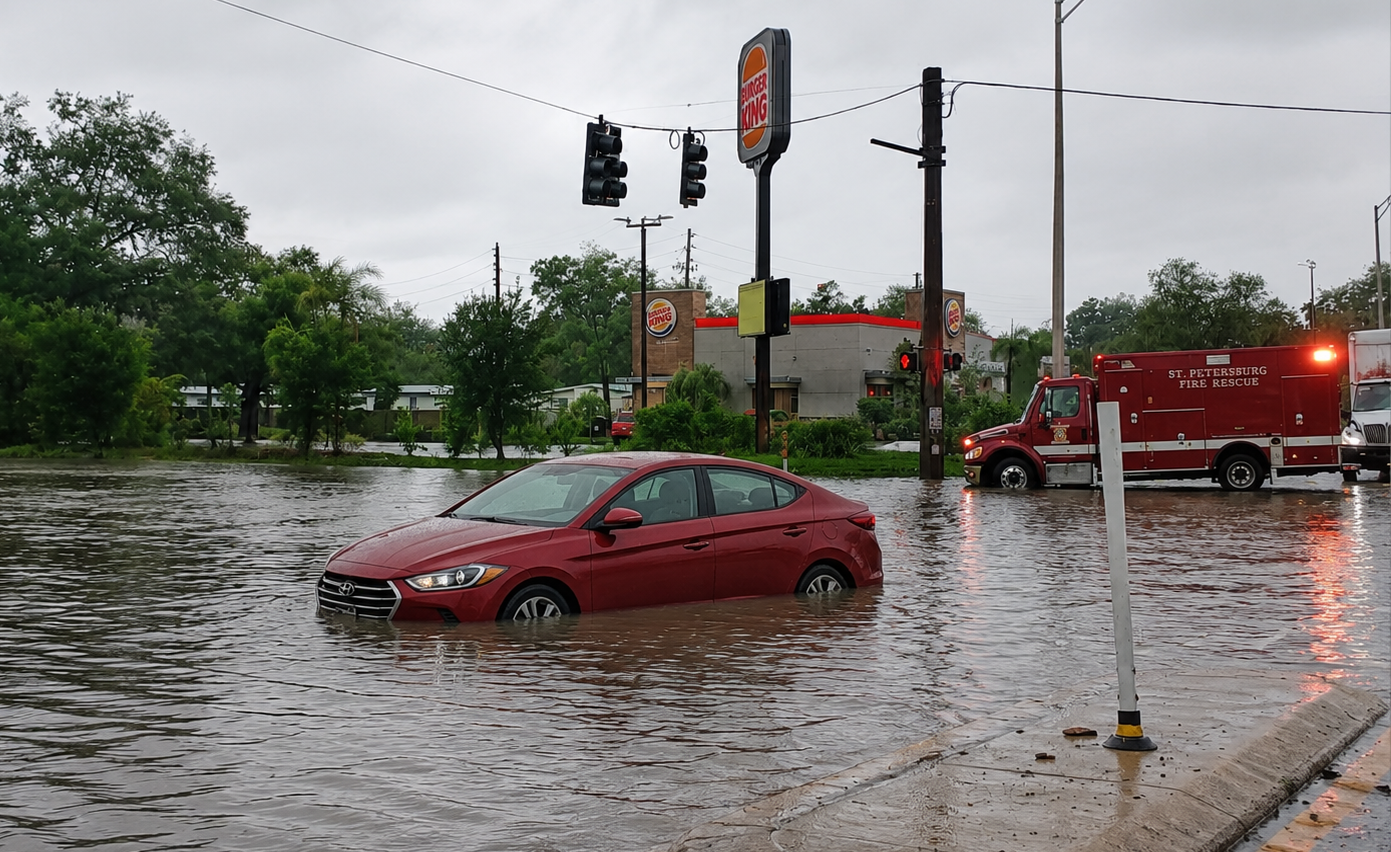
A newly released urban planning study has concluded that recent flooding across St. Petersburg is being driven less by rainfall and drainage infrastructure than by years of organized opposition to new development.
The report, commissioned by the nonprofit Urban Density Institute, found that neighborhoods resisting redevelopment have unintentionally disrupted the city’s “natural stormwater adaptation cycle,” preventing rainwater from dispersing efficiently during heavy storms.
“Development doesn’t just accommodate people—it accommodates water,” senior planning consultant Graham Whitmore said. “Every apartment building or mixed-use project that gets delayed by neighborhood opposition leaves thousands of gallons of rainwater with nowhere to go.”
Researchers say newer developments create what they describe as “high-performance hydrological environments,” where rainwater is naturally drawn toward parking garages, rooftop amenities, resort-style pools and professionally engineered hardscaping before gradually redistributing throughout the surrounding area.
The study recommends accelerating development approvals in flood-prone neighborhoods, arguing that every new residential tower increases the city’s stormwater capacity.
“People see another apartment building and think traffic,” Whitmore said. “What they should be thinking about is flood mitigation.”
The report concludes that if current development trends continue to face community resistance, future storms could produce even higher water levels.
“A single 48-story mixed-use tower with ground-floor retail would have prevented Sunday’s flooding,” Whitmore said. “This is exactly the kind of infrastructure we need.”