Council Considers I-175 Removal to Activate Vertical Growth in South St. Pete
For decades, Interstate 175 has stood as a reminder of one of St. Petersburg’s most painful chapters.
Built through a once-thriving Black neighborhood, the highway displaced thousands through eminent domain, severed generational ties, and left behind promises of replacement housing that never materialized. Families were uprooted. A community was dismantled.
Advocates say that history demands action.
“This is about restorative justice,” organizers explain. “It’s about reconnecting what was divided and creating the conditions for a neighborhood to thrive again.”
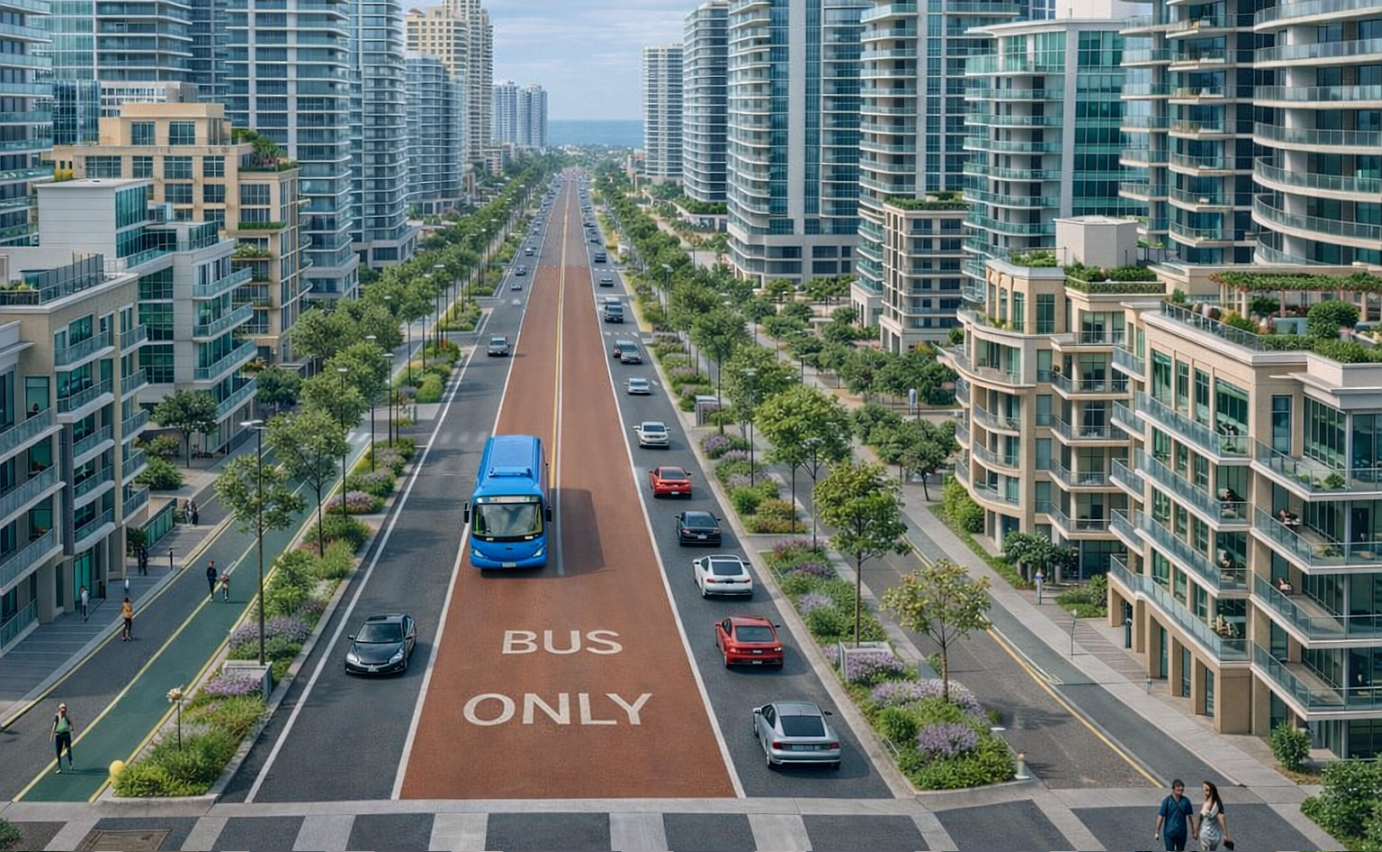
Their proposal would remove I-175 entirely and replace it with a surface-level boulevard designed to stitch the community back together.
And, of course, to make way for new housing.
So much new housing.
Developers describe the corridor as a “once-in-a-generation activation event.”
“It’s extraordinary,” one local real estate executive said, idly twisting the ends of his curled mustache. “Centrally located acreage running straight into downtown. Contiguous parcels. Medical district proximity. You couldn’t assemble land like this today if you tried.”
Plans under discussion include mixed-use towers, luxury condominiums, boutique retail, rooftop hospitality concepts, and what one consultant called “heritage-inspired penthouses in the $30 million range.”
Renderings show tree-lined boulevards flanked by high-rises featuring resort-style pools, co-working lounges, concierge service, and “justice-forward design elements.”
Market analysts say removing the highway could “unlock underutilized frontage” and create “tremendous upside potential.” Some planners suggest the transformation could extend beyond the highway footprint itself.
“We see this as an opportunity to share the luxury of downtown with South St. Pete,” one council member said. “For too long, that experience has been geographically limited.”
Another developer was more direct.
“This is big money,” he said, gesturing toward glass balconies and rooftop pools. “I mean — it’s going to restore the community. But yes. Also money.”
When asked whether profit motives were influencing the momentum, stakeholders pushed back.
“This is not about development,” one advocate said while standing in front of a slide titled Projected Revenue Phasing Strategy. “This is about healing.”
City leaders have expressed openness to the proposal, calling it catalytic and aligned with broader revitalization efforts. Transportation concerns are being described as “manageable through innovative corridor optimization.”
Supporters say the boulevard would symbolize renewal.
Developers agree.
“You don’t often get to honor history and reposition a premium corridor simultaneously,” one investor said. “It’s beautiful.”
At its heart, organizers insist, the effort remains focused on justice.
And if that justice happens to include luxury mixed-use activation, generational wealth creation, and skyline-defining residential product, that is simply the natural byproduct of progress.
Because sometimes the most meaningful way to restore a neighborhood is to thoughtfully reimagine its revenue potential.